
Origins in Achete under the Order of Christ
In 1395, “Dona Belida” enters the written memory of the Tejo Valley as a named rural estate in the territory of Achete, Santarém.
Local institutional sources state that Quinta Dona Belida was created in 1395 and that it belonged to the Order of Christ. In the same local tradition, Achete is described as having been, for a period, an important comenda associated with the Order, a status later echoed in civic heraldry through the presence of the Order’s cross.
This first record does not necessarily describe a house. It describes a juridical and territorial reality: land recognised, administered, and named.
A Place-Name That Endured
The persistence of the name matters. Contemporary administrative and postal references still list “Dona Belida” and “Quinta Dona Belida” as localities under Achete, confirming continuity of the toponym in the present landscape.
In a country where many rural names dissolve into anonymity, a place-name that remains legible across centuries signals more than geography. It signals memory that did not fully break.
To say that Dona Belida was property of the Order of Christ is to place it within an institutional system that combined:
territorial administration
agricultural productivity
and long-term tenure structures
In the Tagus hinterland, the Order’s land was not merely held: it was measured, taxed, cultivated, and integrated into local networks of obligation and privilege. Estates existed as productive units, their value described through land, water, trees, presses, storage, and seasonal yield.
This is the context in which a quinta can be “created”: not necessarily built from nothing, but constituted, legally and administratively, as a named estate.
Becoming a Private Estate
During the 15th century, an important transition took place in the history of Dona Belida. A royal concession by King Afonso V of Portugal confirmed the estate to Lourenço de Beça, marking the beginning of its life as a privately held quinta.
This moment reflects a broader transformation that was taking place across Portugal during the late medieval period. Lands that had once belonged to religious or royal institutions were increasingly granted to members of the lesser nobility and trusted royal servants. Through such concessions, the Crown rewarded loyalty and ensured that agricultural lands continued to be cultivated and maintained.
With this grant, the lands of Dona Belida evolved from institutional administration into a noble rural estate, rooted in the agricultural landscape of the Santarém region. The estate would now be managed as a private property, shaping its identity as a quinta for the centuries that followed.

Flower Harvest at the Estate
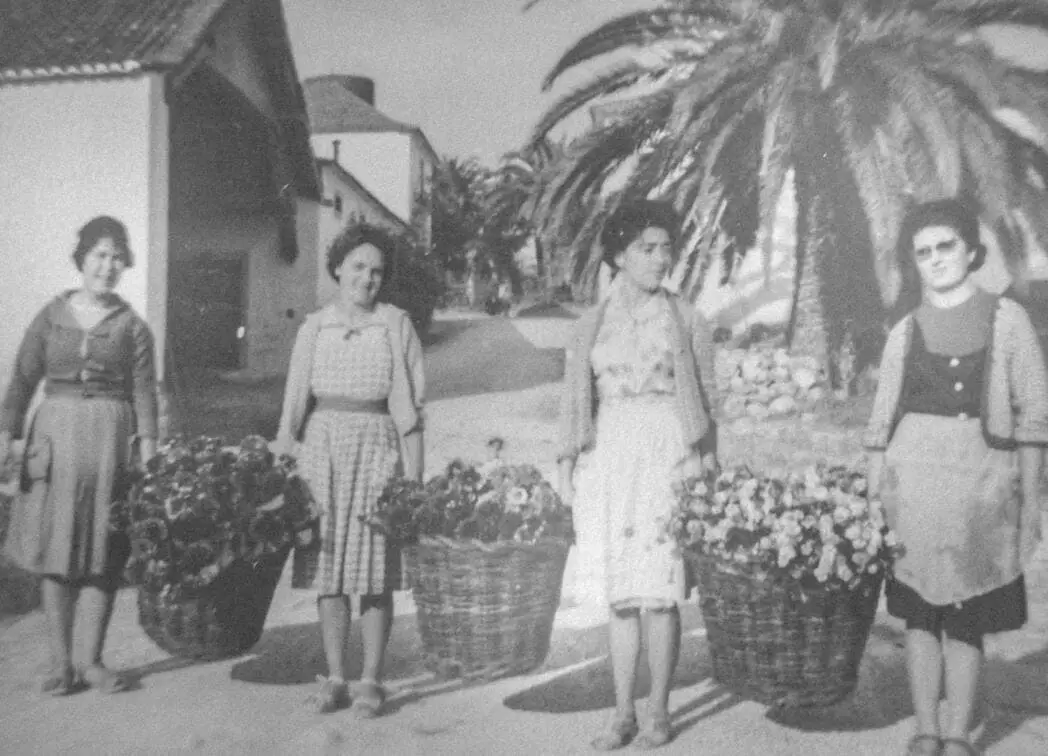
Flower Harvest at the Estate By the mid-20th century, the lands of Dona Belida were known not only for their fields but also for their flowers. Roses (Rosa centifolia) and carnations were traditionally harvested on the estate, gathered carefully in large baskets during the flowering season. These flowers were used for decoration, local festivities, and everyday household life, reflecting the close relationship between the estate and the surrounding community. The cultivation and harvest of flowers formed a gentle but meaningful part of the agricultural rhythm that shaped life at Dona Belida for generations.
Agricultural Life at Dona Belida
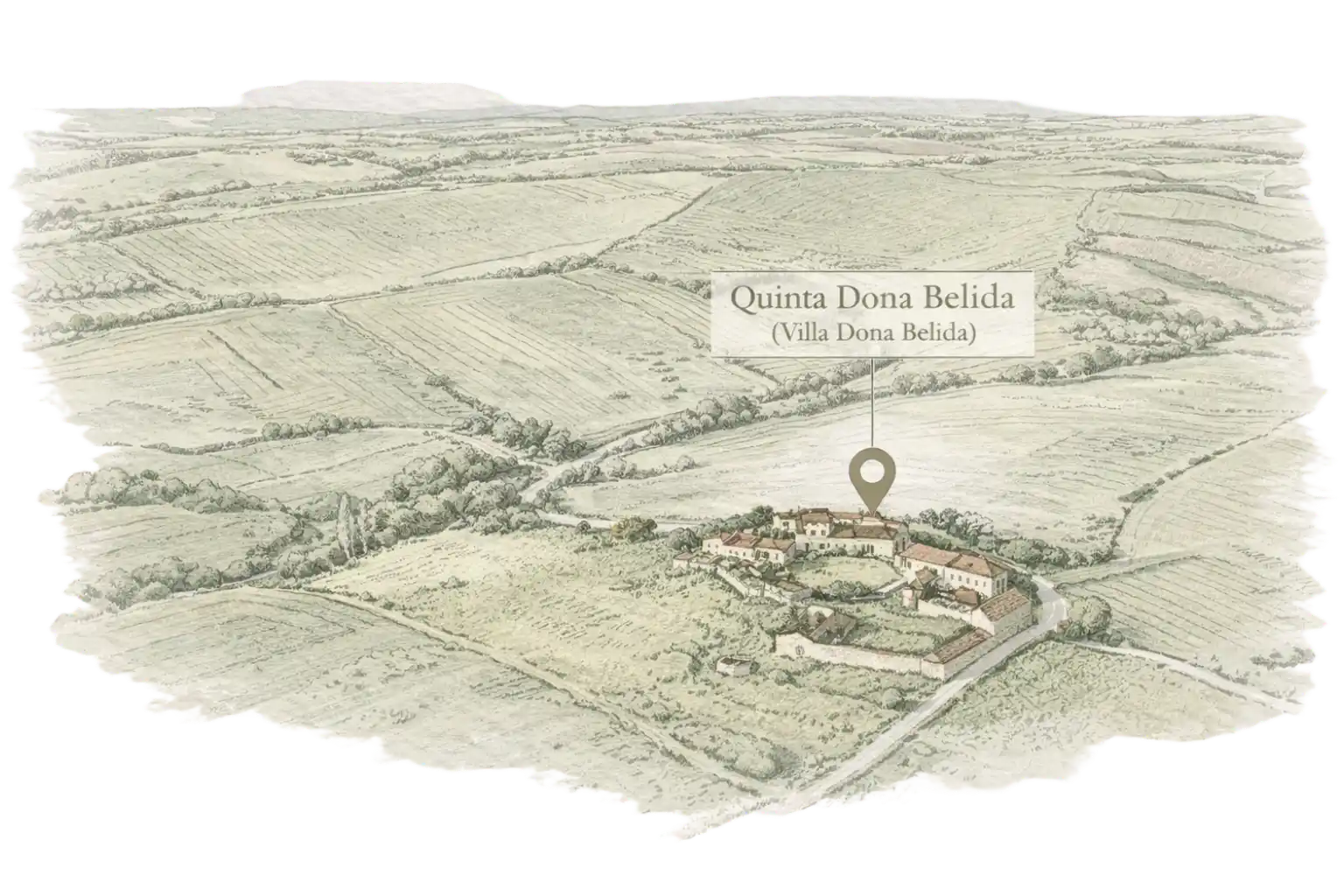
For generations, Dona Belida lived according to the quiet rhythm of rural life. Like many estates in the Tejo Valley, the quinta was defined by agriculture and by the natural cycles of the land.
Fields, orchards, and olive groves formed the heart of the estate’s activity. Rural buildings provided space for storage, work, and the daily life of those who cultivated the land.
Among the structures associated with the estate was a traditional lagar de azeite, an olive oil press, which confirms the role of Dona Belida in the production of olive oil, one of the most important agricultural products of the region.
For centuries, estates such as Dona Belida formed small agricultural worlds of their own, connecting land, labor, and local communities. The production of olive oil, wine, and cereals sustained both the estate and the surrounding villages, embedding Dona Belida within the broader rural culture of Santarém.
The French Invasions
The peaceful rhythm of the countryside was dramatically interrupted during the early nineteenth century. In 1810, Portugal became one of the principal stages of the Peninsular War, when the armies of Napoleon invaded the country.
As French troops moved across the region, many rural estates suffered destruction and looting. Local historical accounts record that Quinta de Dona Belida was among the properties that were plundered and damaged during this turbulent period.
For the communities of Tejo Valley the invasions represented a moment of deep disruption. Agricultural production was interrupted, buildings were damaged, and many estates faced years of recovery in the aftermath of the conflict. The story of Dona Belida during this period reflects the wider history of the Portuguese countryside during one of the most difficult chapters of the nation’s past.
1911 . The Estate Takes Its Present Form
At the beginning of the 20th century, a new chapter began for the estate. In 1911, the main residence of Quinta de Dona Belida was constructed, together with a series of surrounding agricultural buildings that defined the layout of the estate as it is largely known today.
Combining residential spaces with structures dedicated to agricultural work and storage. Together, these buildings formed a coherent estate complex of approximately 2,480 square metres, shaping the physical identity of Dona Belida for the century that followed. The construction of the house marked a moment of renewal for the estate, establishing the architectural framework that still characterizes the property today.