
When work began at Villa Dona Belida, the estate had been quiet for many years. The garden had grown dense with vegetation, paths had disappeared beneath grass and soil, and much of the architecture remained hidden behind ivy and branches. From the outside it seemed abandoned, yet the structure of the place remained intact beneath the layers of time.
Restoration of historic rural properties often begins in a simple way: by clearing the land and observing what survives. Before any architectural work could take place, it was necessary to reopen the garden, reveal the original pathways, and understand the relationship between the house and the surrounding landscape.
A Landscape Closed by Time
Over the years, vegetation had grown freely across the grounds of the villa. Trees, shrubs, and climbing plants had slowly taken over the garden, covering walls and pathways and transforming the estate into a dense patch of greenery. From certain angles, the house was barely visible.
Such transformations are common in rural properties left unattended for long periods. Without regular maintenance, gardens quickly revert to a natural state, gradually erasing the human layout that once organized the space.
Clearing the Garden
The first hours of work were dedicated entirely to clearing the overgrowth. Tools were unloaded, branches were cut, and vegetation was removed piece by piece. As the garden began to open, sunlight reached areas that had remained shaded for many years.
This process was less about changing the landscape than about revealing it again. Beneath the vegetation, the original organization of the property slowly began to reappear.
The Rediscovery of the Stone Paths
One of the most notable discoveries of the day appeared beneath the grass. As soil and plants were removed, sections of traditional Portuguese calçada stone pavement began to surface.
These stone pathways, once part of the garden’s circulation, had been buried for years under vegetation and, in some areas, even beneath a thin layer of cement.
The stones revealed traces of how the garden had once been used — small paths guiding movement through the property and connecting different parts of the estate.
A Neighbor’s Help
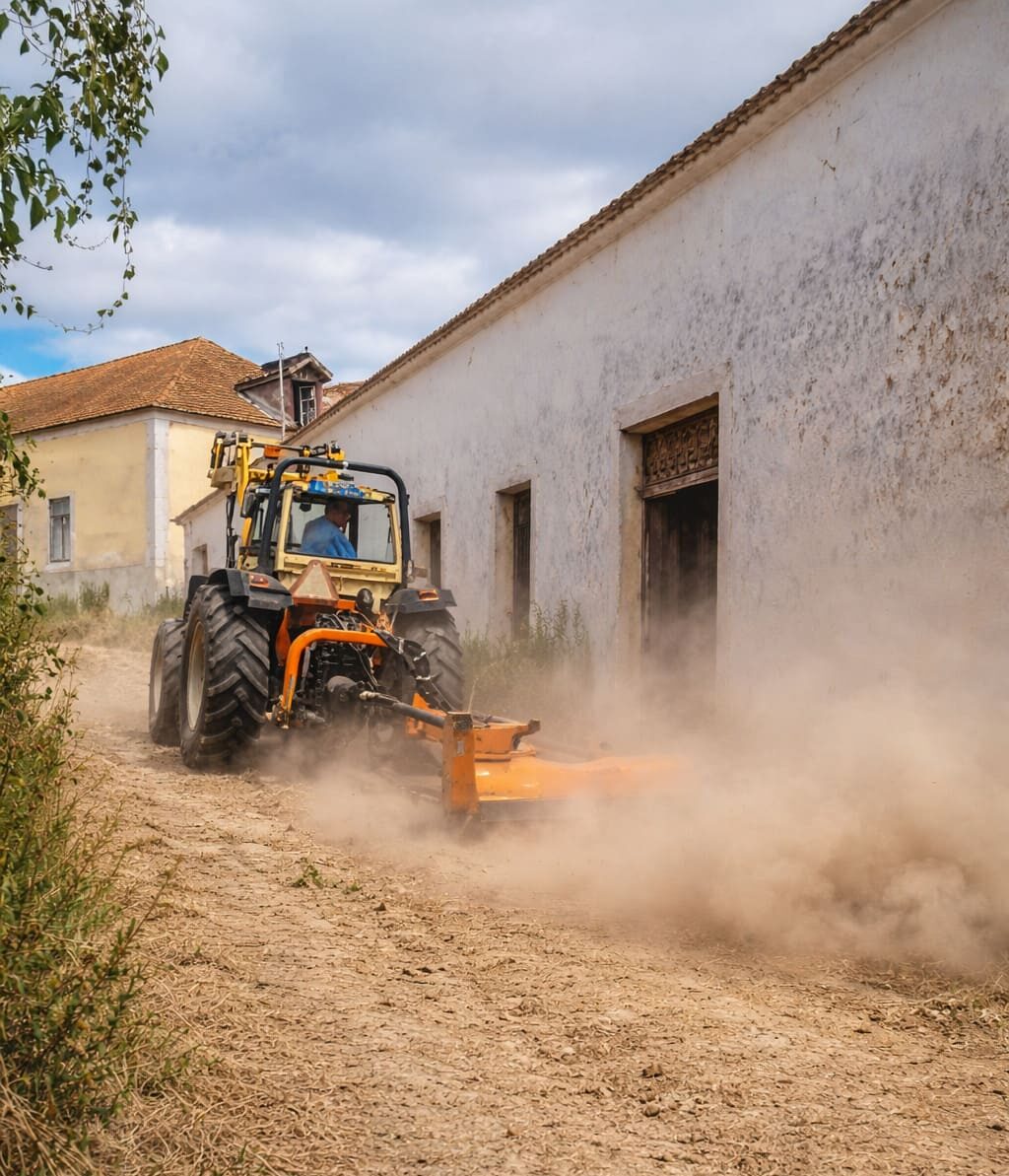
Restoration projects in rural regions often involve unexpected forms of cooperation. On that first day, a neighbor named Mr. Carlos arrived with a tractor and offered to help clear the land.
With his assistance, branches and debris could be removed far more efficiently than through manual labor alone. What might otherwise have taken several days of work was largely accomplished within a single afternoon.
These moments are reminders that rural landscapes are not isolated spaces, but parts of long-standing communities.
Removing the Ivy from the Walls
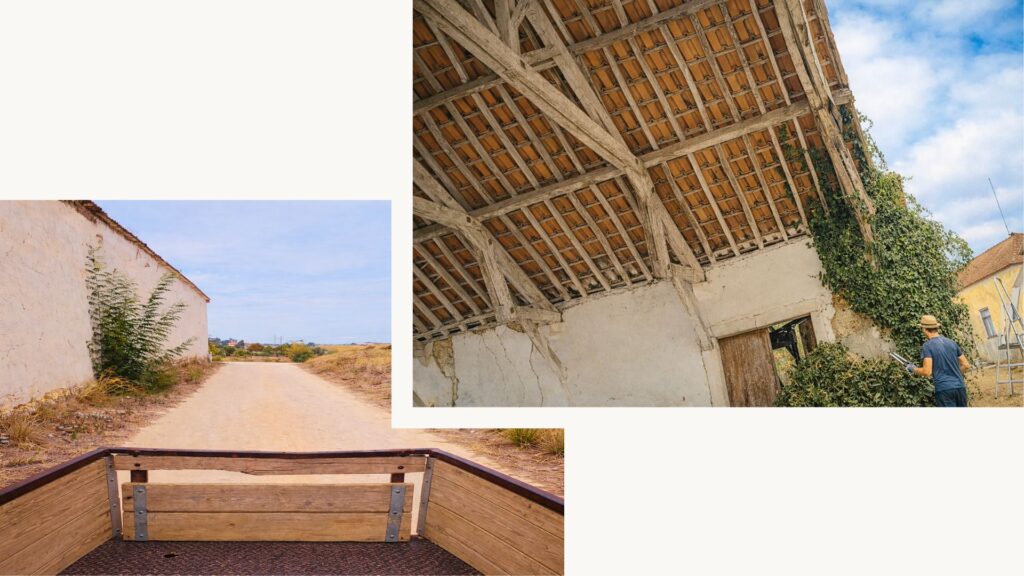
Another essential task was the careful removal of ivy that had spread across the walls of the villa. While visually appealing, ivy can gradually damage masonry by trapping moisture and penetrating small openings between stones or bricks.
Removing it required patience. Each section had to be cut and detached without pulling or damaging the surface beneath. This step was necessary not only to reveal the architecture of the building but also to help preserve it.
In regions such as Santarém, controlling vegetation around buildings is also important for reducing fire risk during the hotter months.
The Entrance with Three Arches
As the vegetation around the house was cleared, one of the villa’s defining architectural features became visible again: the entrance framed by three stone arches. For years, these arches had been partially hidden behind leaves and debris, making the façade difficult to read.
Once exposed, they restored a sense of proportion and character to the building. Architectural elements like these often serve as anchors for restoration work, helping to define the original identity of the structure.
An Unexpected Sign of Life
Toward the end of the day, attention turned to the water system. The pipes had remained unused for many years, and their condition was uncertain. Rust had accumulated, and the infrastructure had not been tested in decades.
Yet when the system was briefly opened, water began to flow.
It was a small moment, but one that suggested the property still retained part of its functionality despite years of disuse.
The Beginning of the Restoration
By the end of that first day, the estate already looked different. The garden had opened, stone paths had resurfaced, and the architecture of the villa had begun to reveal itself again.
No reconstruction had yet taken place. No rooms had been redesigned or rebuilt. But the essential first step had been completed: the land surrounding Villa Dona Belida had been cleared, allowing the house and its landscape to be seen once more.
From that moment onward, the long process of restoration could truly begin.